Wednesday, August 8, 2012

Coding Fascination

Computers and the internet have forever been a total black box for me. Other than getting upset about why some programs would run too slow, or trying to figure out how to format the text of my blog posts by clicking repeatedly on the corresponding buttons of the blog-post-writing interface, I never really found it necessary to consider the workings of my everyday laptop activities, and coding - in my mind - was something only super intelligent and super nerdy programming geeks did. How prejudicial of me. Thankfully, Hillary supplied me with inspiration to keep my brain engaged post-graduation, and one point on this awesome list of free classes (gasp!) was a link to Codecademy, specifically their Code Year track.


I have probably been gushing to too many people already about what a revelation this was, but the fact that 4 months later I am still doing my little coding exercises and talking about Java and html is proof enough how fun and motivating, as well as empowering, learning how to code is. The Code Year Track is split up in different sections that will walk you through basic Javascript, HTML, CSS and more - bringing you upto speed on constructing small programs to making your first website all by yourself - and best of all have countless exercises that give you practical experience as well as fun motivation (plus you can compete with your friends for badges and awards! #nerd). All of a sudden, computers and programs have ceased to be the equivalent to sorcery to me and more similar to an advanced math class - I'm not quite there yet to fully comprehend everything, but well on my way.


Looking at the html version of my blog, and actually being able to understand at least half of what it all means, is extremely gratifying (practical example: by going into the html, in this post I finally managed to get my images to the exact size I needed them! and justify the middle paragraph! mini-win times two!), and I would definitely suggest to everybody to dabble at least a bit in coding if only to crack open that black box like I did. And if you are at McGill next semester, make sure to consider AltU which offers student-teaching-students coding classes - I had a fabulous time this summer with our awesome teacher George who will teach another Java class this Fall!

Tuesday, July 24, 2012

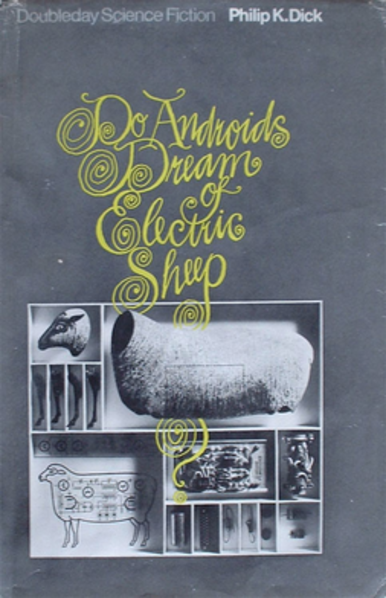
Book Club: Do Androids Dream of Electric Sheep?

There are few instances where I watch a movie based on a book before I read the book itself, but through a combination of my total unawareness of popular culture and awesome friends, I found myself sitting in a viewing of Blade Runner last winter, totally immersed in a futuristic society that could not be more dystopian. "Do Androids Dream of Electric Sheep?" by Philip K. Dick is the (loose) basis of the story line of Blade Runner, and the two of them are so intrinsically linked together in my mind that a review of one while neglecting the other would be futile. What the movie does extremely well is setting the scene for the main plot: the danger of humanoid robots - in fact, so extremely humanoid that even experts have trouble telling the difference - escaping into a post-apocalyptic society where they could potentially go on a rampage since their one main distinguishing characteristic is their complete lack of empathy. Other than that, neither their physique nor their intellect or reactions give them away - except maybe for the fact that they might even be able to outsmart humans since they function much more analytically, free from all these emotions that prevent humans from making rational decisions. This bone-chilling set-up is mirrored in "Blade Runner" by a desolate metropolistic landscape where the isolation and disillusionment is palpable. 


File:DoAndroidsDream.png
In contrast, the writing style of "Do Androids" is perplexedly matter-of-fact; in the beginning, the android headhunter seems more disgruntled with his lower-middle class lifestyle than daunted by the prospect of facing murderous machines (though that fact does change over the course of the story). Weirdly, it works though, similarly to the magical realism John described when we discussed A Thousand Years of Solitude - the reader is drawn even faster into the story in which this sort of society is so obviously normal for its inhabitants, and is more closely confronted with the incredible facts the society deals with because it is less easy to shrug it off as fantasy. 
Furthermore, I loved two aspects of the story especially because they were completely absent from the movie and yet provided such added depth: firstly, the obsession with animals that gave the story its title (after nuclear warfare, animals are dishearteningly rare; our hero headhunter's main pride is his electric sheep which, when it breaks and gives away the fact that it was not a real live pet quickly shames him into incredible feats in order to reacquire the social capital that comes with owning a living animal), and secondly the religious aspect (members of the dystopian society all own an Empathy Box which, when utilized, reunites them mentally and physically with the struggles of Wilbur Mercer, the founder of the religion of Mercerism). Both I find introduce important questions to ponder (beyond the discussion on the importance of empathy as distinguishing human characteristic which John highlighted): what is the true value of life, both human and non-human, and is our current society paying it the respect it merits? Will we only learn to do so when it is already too late, as scarcity economics tell us is normal human behavior? And what is the role of religion, any religion, as questionable and problematic as it may be, in helping people to live through their struggles and (as an online web-comic surprisingly poignantly described) helping them "cope with the fact that you are a bag of meat sitting on a rock in outer space and that someday you will die and and are completely powerless, helpless and insignificant in the wake of the beautiful cosmic shitstorm we call existence"?

Sunday, July 8, 2012

The National Park a Bike Ride Away

This summer in Montreal, I am repeatedly baffled by the options of outdoor activities available really close to Montreal if one only googles around a little. Case in point: Les Iles-de-Boucherville. This National Park is a mere 20k from downtown Montreal, and thus made the perfect outing location for an extensive bike ride. You (and your bike) can get onto the islands with one of three tiny ferries for $6 per return ticket (including the park entrance fee), and the park has another 21 km of bike paths perfect for exploring. The best part - you can even rent kayaks and canoes there! 

Paddling the Îles de Boucherville feels like a trip through the wilderness.

Though, be forewarned - the "trip through the wilderness" that the Montreal Gazette advertized only starts after you survive what pretty much amounts to a cross between Jersey Shore and the Cote d'Azur of Montreal - tons of pretentious speedboats with equally obnoxious passengers blasting dance music, chugging beer and "enjoying nature". Huh. 

Finally, it's advisable to take note that ferries depart the mainland at every full hour and leave from the islands at every half hour, and that the last one leaves at 5.30 on the dot - my friend and I arrived at the dock at 5.26 and were very happy not to have to swim ashore (since the only road leading up to the islands is the highway.) Happy exploring! 

Wednesday, June 27, 2012

News Junkie

I LOVE being informed.
As a student of International Politics, that should come as no surprise. What might, though, is that despite that love I have a very on-and-off approach to actually staying informed. I guess this comes as the unlucky consequence of two facts: there is an unlimited amount of information available - and too little time in my day to process it. 
My first experiences with the news started in Switzerland, where when reading the local newspaper you could be lucky to find a page and a half covering global occurrences. The rest was dedicated to the really important things in life - which village had a fundraiser when, the most recent local scandal and an interview with a moderately famous cheese maker from the vicinity. Thus, I found myself already proud of my achievements if I listened to the radio or occasionally scanned the headlines of the big newspapers at the kiosk. 
A rude awakening awaited me when starting as a fresh-faced U0-student at McGill. I vividly remember sitting in my first lecture of "Intro to International Relations" when the prof said "So, I assume you have all followed the war this summer in depth..." I was dumbfounded. I had no idea what he was speaking about. Granted, I had just moved continents, but the fact that I had missed an interstate war because I was unpacking boxes (it was the stint between Russia and Georgia, by the way) was unacceptable for me. I swiftly proceeding to signing up for a daily Globe and Mail delivery to my doorstep - and spent the rest of the year struggling to get through at least half of the thick wad of paper clogging up our entrance every morning. 
This valiant, but always somewhat quixotic effort to keep up with what was happening everywhere at all times continued throughout my university career. The thing about studying international relations is that there is barely any information that is not relevant or interesting to you and so suddenly you get sucked into reading a 5 - part expose about the weapons Russia is allegedly delivering to Syria and found yourself late for work yet again, but yet have only read one out of the gazillion articles on your to-do list.
I am not sure that I have found the answer to this challenge quite yet, but technology does make it easier to stay on top of things. Two tips for those overwhelmed by information too - 
  • Google Reader lets you subscribe to the RSS feeds of all major news websites. It is a little arbitrary which articles are featured, but in essence, you open one page and the latest articles from as many news sources as you feel like are at your fingertips! Plus you can set Google news alerts to key words (I have done that with "food security" and "right to food", for example). I love it for an overview of news from various viewpoints and regional concentrations - Right now I am subscribed to the New York Times World news (plus their Fitness and Nutrition section), Le Monde Diplomatique, the Frankfurter Allgemeine Zeitung, Al Jazeera English, the Economist, and Foreign Policy (from time to time I add or delete some; for example, I found myself always skipping the regular Le Monde articles and thus did away with them.)
  • Podcasts are the best thing ever invented. Ever since John introduced me to This American Life and Stuff You Should Know, I have loved listening to these and other podcasts - on my commute, on a walk, when cleaning, the possibilities are endless! For news, the BBC World Service Global News podcast updates twice a day and gives a great overview of worldwide current topics. I also just found that the German ARD Tagesschau has both audio and video podcasts available.
Do I still find myself fighting a losing battle in the quest for absolute knowledge? Absolutely. But at least now that I make a dent in my reading and listening to news every day, I won't simply overlook another war - let's hope so at least. 

Sunday, June 24, 2012

By the Seashore in ... Montreal?

Sometimes, when dreaming of tiny Italian fishing villages or aquamarine waters and hidden coves on Croatian islands, it is easy to forget the beauty of your everyday surroundings. This summer, I made it my mission to finally explore all the places in and around Montreal that I had wanted to see for four years and yet never managed to get to. When my friend Steph invited me to help her paint her room (at her home in a suburb of Montreal), instead of taking the metro and driving, I thought ... why not bike? 

After taking various bike paths down South from the Plateau, you reach the Old Port (which in itself is lovely to explore). Follow the path that edges around the promenade close to the water steady West, and eventually you will hit the Lachine canal, a paradise for joggers, bikers, inline skaters and picknick-ers alike. 


Close to the canal, you can also find various rental services - for bikes, kayaks, canoes and pedalo boats - for the times that you want to get even closer to the water. I went canoeing there with some friends two weeks ago, and I had such a blast! The canal also holds dear memories to me because this is where I did almost all my long runs leading up to my marathon in 2009 - and let me tell you, if you are going to run 32 km, you will want your path to be pretty at least! 

Its name purportedly comes from the unsuccessful explorer Cavalier de Lasalle, who was convinced he could find a passage to China. Once he came back and had to admit his failure, the locals called the land he owned (and on which the canal was later built) La Chine (China) in order to mock him. 
The path leads out of Montreal proper, into the Lasalle borough and all the way up to Lake Saint-Louis, which adjoins the island of Montreal at the confluence of the Saint Lawrence and Ottawa Rivers. 


doesn't it look like the sea?
 Then, I turned right to follow the Lakeshore route, which took me along the Northern edge of the lake. People here really seemed to lead a lifestyle similar to those living close to the ocean - there were yacht clubs, tons of parks, sitting areas and viewpoints along the water, and many pretty boats waiting for the next excursion. 


so much water!
I followed the path all around the lake until I hit Boulevard St. Jean - one of those horrible three-laned driveways clearly built for a car-dependent society - and was suddenly reminded that I was not, in fact, somewhere in Southern France, but in a North American suburb. Yet, I bravely defied the tons of cars and made my way safely to my friend's house for a successful day of painting. I left in the afternoon at 6.30 and followed the same route back home, which gave me the opportunity to enjoy the sights in the late afternoon sun. So pretty!!


this is the Lachine canal again.
Today my legs ache a tiny bit (I mapped it out and from door to door it was a 80km out-and-back trip!), but it was so worthwhile! I would suggest everybody snatch up their bikes and go explore - who knows what you will find!